
The Stanford Marshmallow Experiment

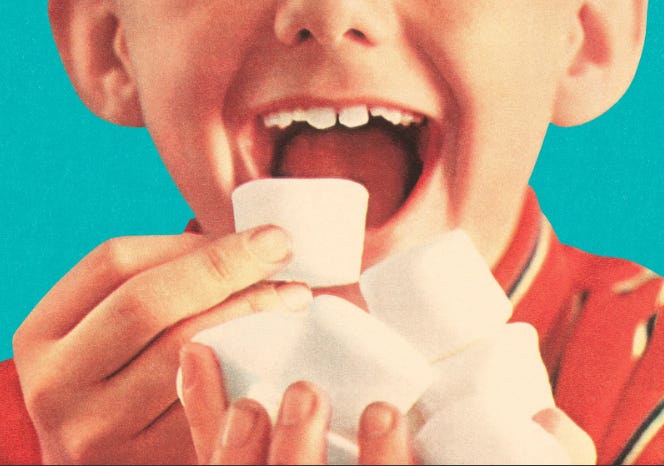
From the Simply Psychology Article:
Experiment: The Stanford Marshmallow Test asked children to choose between one treat now or two treats if they waited, measuring their ability to delay gratification. It became one of psychology’s most famous studies on self-control.
Purpose: The experiment aimed to explore how early self-control skills might relate to future success in areas like academics, health, and relationships. Researchers followed participants over decades to see long-term patterns.
Findings: Initial results suggested that children who could wait tended to have better life outcomes later on. These outcomes included higher test scores, healthier lifestyles, and stronger social skills.
Limitations: Later research showed that family background, environment, and economic stability strongly influenced waiting times and life outcomes. This challenged the idea that self-control alone drives success.
Delayed Gratification = More Success
Simply put:
there are those that put off until tomorrow so they can have a better future and there are those that live for today.
people who save and invest money (Savers) are more successful than those that spend all of their money as soon as they get it (Spenders).
Frugality = Delayed Gratification
Being frugal is the opposite of being wasteful. It’s using resources, typically money, carefully. Frugal people use their reasoning brain more than people that operate by emotions. “Do I really need this or am I in a moment of weakness and want to buy it?”
According to The Millionnaire Next Door, “frugality is the cornerstone of wealth building”. Rather than waste money, typical millionnaires save it. They don’t buy the most expensive house or car they can afford. They buy what they need.
Credit: The New Twist to Marshmallow Eating
The American Consumer will generally eat the first Marshmallow that is put in front of them. They will not wait. We are a nation of Marshmallow Eaters.
Born in a country of excess, we have the attitude of abundance. There’s no such thing as Delayed Gratification when every one around us is enjoying things NOW.
There is no saving for rainy days because there are no rainy days. The government makes sure of that.
In fact, we Consumers do the TRUE opposite of saving: We BORROW.
Instead of SAVING for a better tomorrow where we can work less and enjoy more, we BORROW to ensure there will be a WORSE tomorrow.
Household Debt:
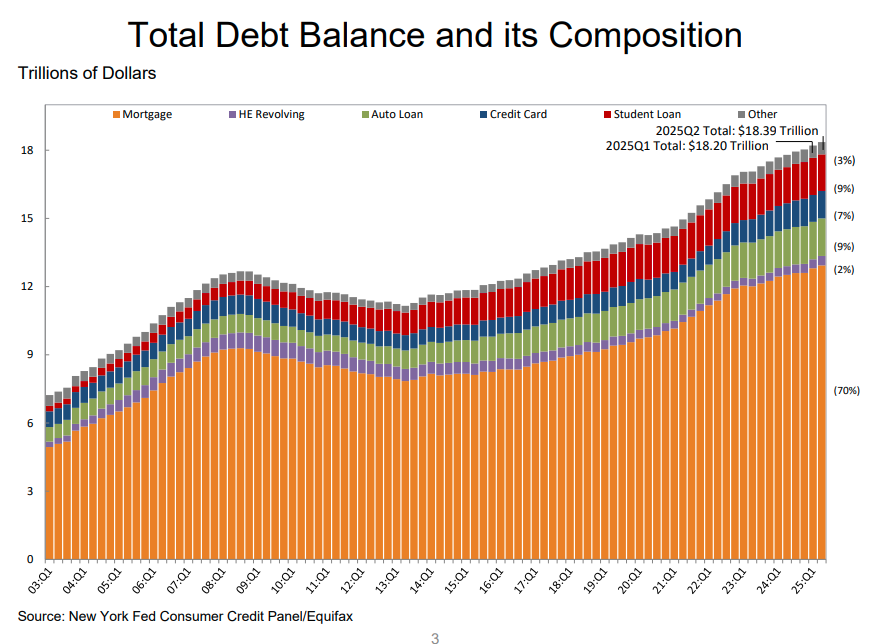
We not only eat the marshmallow in front of us, but we borrow money so we can eat until we are full and guarantee we’ll never be able to eat a marshmallow again in the future.
An example of this is Higher Education and Student Loans. Young people want to party as long as they can, so they take out loans, enjoy being young with ne’r a care and then become debt slaves for the rest of their lives.
Social Media and the Marshmallow Eaters
Social Media, like X, acts as a Support Group for the Marshmallow Eaters. They gather together and share their woes. They make videos crying in their cars about having to work to pay debts. They make angry videos from their bedroom in their parents’ house lashing out at a system that is enslaving them.
Social Media has normalized Marshmallow Eating. By blaming others and the system we deny ownership of the problem and claim we are powerless against it. This allows us to continue on our path of doing nothing to get better.
It’s a Choice
Marshmallow Eating has always been a choice.
People can rationalize the behavior, just like someone rationalizes weight gain due to improper diet, but the truth is that your behavior is under your control.
That should be good news to those with a spending problem - but it’s not. No one wants to think THEY’RE the problem.
That’s why we try to blame the rich or the Boomers or our parents.
But the bottom line is that there have been Marshmallow Eaters since the beginning of time.
They want it all and they want it now.
I’ll give you that the system supports and encourages consumption. Just like all the processed food in the grocery store encourages obesity. But we created this system to fill our urges. We want the cheap, tasty processed food - and we want cheap credit so we can buy more stuff.
Conclusion
The big, solvable problems with the economy, our physical health, and even our mental and spirtual health, are related to a lack of discipline and self-control.
We make bad choices.
Where the simple solution is to learn from our mistakes and get better, we choose to blame the system or the people around us and continue down our wicked path.
There will always be Spenders and Savers. It is the way and it is a choice. Whichever path you choose, own it. Don’t blame.
That won’t help you, your country or your relationship with others.